What we checked: how “Is Adam Hamilton a Christian?” became a campaign question, whether critics turned a dispute over doctrine into a test of who counts as a real Christian in public life, and where that move comes from. What the record shows: the President and a sitting senator questioned whether Hamilton is a real pastor, and the Vice President questioned his Christian beliefs, Newsweek reported. We found no one calling Hamilton demonic, and no one calling Methodists as a group non-Christian. Verdict on the theology: none. Whether Hamilton’s beliefs are orthodox is a question for churches, and this site doesn’t referee it.
Is Adam Hamilton a Christian? He says so (“I offer my life to Christ,” he told ABC’s This Week, Newsweek reported), he founded and leads the largest United Methodist congregation in the country, and even the open letter urging him to quit the race addressed him as “Pastor Hamilton” and made its appeal “as a baptized brother in Christ.” On November 3, Kansas voters sent him to the U.S. Senate over Republican Sen. Roger Marshall, the first Democratic Senate win in the state since 1932 (AP via OPB). During the campaign, though, his Christianity itself became an issue, and the way that happened follows a pattern older than the Constitution.
Is Adam Hamilton a Christian? What his critics said
In August, Breitbart News posted an edited clip of a 2022 sermon in which Hamilton talked about people of other religions and salvation. Sen. Ted Cruz (R-Texas) responded on X: “Why do Democrats keep nominating ‘preachers’ who reject the central tenets of Christianity?” He called it a “heretical ‘sermon’” that “directly contradicts the Bible,” and quoted John 14:6 (Christian Post). Marshall thanked Cruz, according to the Associated Press.
It kept going:
- Early October: Kyle Lammott, a Wichita pastor, published an open letter that drew more than 700 signatures. It asked Hamilton, “as a baptized brother in Christ,” to repent of his teachings and “step out of this race” (Christian Post; Washington Stand).
- By October 11: Vice President JD Vance, who is Catholic and campaigned for Marshall in Kansas, “questioned his Christian beliefs and accused him of holding views that were inconsistent with Christianity,” Newsweek reported. That is Newsweek’s summary; the article doesn’t quote Vance’s own words on the point.
- On Truth Social: In a post endorsing Marshall, Trump “repeated attacks on his ministry and political views,” according to Newsweek, which said Trump “echoed religious criticisms” of Hamilton. Newsweek’s account of the key line: “Referring to his support among evangelical voters, Trump wrote: ‘I can state unequivocally that Adam Hamilton is not one of us!’” Newsweek quoted only that sentence and didn’t give the post’s date.
- October 19: At a rally in Park City, Trump said Hamilton “openly mocks Jesus,” then: “he’s a pastor, I guess, but he doesn’t act like a pastor because his views aren’t of a pastor” (Roll Call transcript). We looked at that charge in an earlier post; Trump did not point to any statement in which Hamilton mocked Jesus.
- Late October: KCUR reported that Marshall told supporters at a rally in Park City, “He’s the reason that the Methodist church split. One out of four left his denomination because of Adam Hamilton’s wokeness.” KCUR’s fact check found that about a fourth of United Methodist churches left between 2019 and 2024, mainly over LGBTQ policy, and that in 2019 Hamilton had backed the One Church Plan, which would have let local churches and regional bodies set their own LGBTQ policy (KCUR via HPPR).
Hamilton wasn’t alone. Democratic clergy and faith-forward candidates ran across the country this year, and several heard the same thing. In Iowa, Republican congressional candidate Joe Mitchell called two Democratic clergy running there “PINOs … Pastors in Name Only” (NPR), and applied the term to Talarico too (Religion News Service). In Texas, Ken Paxton, the state’s attorney general and a Republican Senate candidate, told Benny Johnson in April that James Talarico, now a senator-elect, is “like a false prophet, convincing people that he’s a Christian pastor” (as transcribed by PJ Media). Johnson, a podcast host who holds no public office, had gone further on his own show in March. Discussing Talarico’s argument about abortion, which drew on Mary, the mother of Jesus, Johnson said, “it’s not only bad theology. It’s, like, straight up demonic,” according to a transcript by Media Matters, a progressive media watchdog. In that transcript, “demonic” describes the argument. We covered more of these in can you be a Christian and a Democrat?
What did Hamilton actually say?
In the 2022 sermon, Hamilton said, “I don’t fear that those folks will spend eternity in Hell,” and “My hunch is there’s going to be a whole lot of people you’d be surprised are going to be in Heaven because of the grace of God.” He also said God “can take that payment Jesus has made and apply it to anyone he chooses based upon what he sees of their own hearts” (Christian Post).
His campaign called this “inclusivism,” as opposed to universalism. It quoted his book Christianity and World Religions: inclusivists “are not saying that all religions are equally valid paths.” In the sermon, Breitbart reported, Hamilton cited John Wesley and C.S. Lewis as Christians who held similar views.
Cruz pointed to Jesus’ words in John 14:6, which read in the King James Version, “I am the way, the truth, and the life: no man cometh unto the Father, but by me” (Bible Gateway). Many Christians read that verse as requiring conscious faith in Christ. Hamilton’s view also routes salvation through Jesus; it differs on whether a person has to know it. Christians have argued about this for centuries. The Protestant Westminster Confession of Faith (1646) says, “much less can men, not professing the Christian religion, be saved in any other way whatsoever” (OPC, chapter 10, section 4). The Catholic Church’s Second Vatican Council taught in 1964, “Those also can attain to salvation who through no fault of their own do not know the Gospel of Christ” (Lumen Gentium 16).
When the AP asked about Cruz, Hamilton said, “If he’s going to call me a heretic, he’s not the first. He won’t be the last.” He added, “I’m not running for the Senate to make everybody in this country Christian or United Methodist.”
The fair case for the critics
A pastor’s job includes judging teaching, and a candidate who runs as a pastor invites that judgment. Calling a sermon “heretical” is church language, and it carries no legal penalty. Some critics drew a line at citizenship. Robert Jeffress, pastor of First Baptist Dallas, said Talarico’s religious beliefs “don’t disqualify him from being a senator, but they do disqualify him from being a Christian pastor, or even a Christian” (POLITICO, via Yahoo News, October 31).
Josh Blackman, a constitutional law professor at South Texas College of Law Houston, makes the best version of the fairness argument in a November 8 Volokh Conspiracy post. If conservative Christians get accused of bending Scripture to fit their politics, he asks, why not progressive ones? “I think the same rule ought to apply to people of faith on all sides of the spectrum.” We agree with the rule, and we applied it to the “Christian nationalism” label in is Christian nationalism a smear?
The rule cuts both ways here too. Democrats make their own rulings on what counts as Christian. In 2024 Talarico posted, “There is nothing Christian about Christian Nationalism,” and called it “a betrayal of Jesus of Nazareth” (Christian Post). That line aims at an ideology, and it names no one. It is still a politician deciding what is and isn’t Christian. Democratic presidential candidate Pete Buttigieg came closer to a named person. At a 2020 CNN town hall, asked whether it is impossible to be a Christian and support President Trump, he said, “I’m not going to tell other Christians how to be Christians. But I will say, I cannot find any compatibility between the way this president conducts himself and anything that I find in scripture” (CNN transcript). He declined to judge Trump’s supporters and didn’t say Trump isn’t a Christian. He did measure a named opponent’s conduct against Scripture during a campaign.
Did anyone say Methodists aren’t real Christians?
In the coverage we checked, we found no one who said that. Breitbart called the United Methodist Church “radically leftist,” according to Religion News Service, which is a political label. Conservative Methodism is alive and well: many of the churches that left the UMC, mostly from its conservative side, joined the Global Methodist Church (KCUR, above). Hamilton’s campaign pointed to a September letter in which 120 Kansas Methodist ministers urged Marshall to focus on policy differences rather than “insulting, demeaning, or dismissing the faith of other Christians,” Newsweek reported. We could not find or open the letter itself.
Who counts as a real Christian? An old American fight
Questioning an opponent’s Christianity has a long history in American politics, and so do the arguments against it.
1774. James Madison wrote that in a neighboring Virginia county, Baptist preachers sat in jail “for publishing their religious Sentiments which in the main are very orthodox” (Founders Online). Their beliefs were mainstream. They were on the wrong side of the official church. (More on which Christianity would govern.)
1800. Thomas Jefferson’s opponents ran on his religion. In an 1800 pamphlet, William Linn, a Dutch Reformed clergyman, wrote that a vote for Jefferson “must be construed into no less than rebellion against God.” The Federalist Gazette of the United States framed the choice as “GOD—AND A RELIGIOUS PRESIDENT; or impiously declare for JEFFERSON—AND NO GOD!!!” (both quoted by historian Daniel Dreisbach in Christian History). Seven years later, Jefferson was still answering “Dr. Linn,” calling one of his charges a “third lie” (Founders Online).
1960. John F. Kennedy, a Catholic, told Protestant ministers in Houston that he opposed anyone who would “subvert Article VI of the Constitution by requiring a religious test — even by indirection.” This year, he said, it “may be a Catholic against whom the finger of suspicion is pointed”; in other years it had been “a Jew” or “a Quaker or a Unitarian or a Baptist” (NPR transcript; JFK Library).
Can a pastor be a senator?
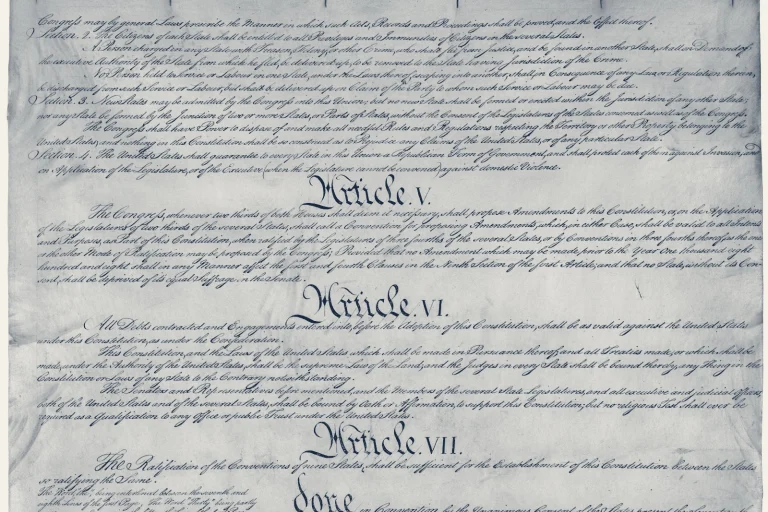
Yes. Hamilton is keeping his pulpit at quarter time (Church of the Resurrection), and the founders argued about exactly that. Some states once barred clergy from certain offices, and Jefferson’s 1783 draft constitution for Virginia would have kept ministers out of the legislature. Madison asked whether such a ban would “violate a fundamental principle of liberty by punishing a religious profession with the privation of a civil right” (Founders Online). By 1800 Jefferson had changed his mind: clergy, he wrote, “ought therefore to possess the same rights” (quoted by the Supreme Court in McDaniel, below). The U.S. Constitution never barred clergy, and Article VI says “no religious Test shall ever be required as a Qualification to any Office.” In McDaniel v. Paty (1978), the Supreme Court struck down the last state ban, Tennessee’s, 8–0. Justice William Brennan wrote that government may not treat religious teachers “as subversive of American ideals and therefore subject to unique disabilities.” Tennessee voters removed the dead clause from their state constitution in 2022 (Ballotpedia).
Why this matters
Article VI binds the government. Voters can weigh a candidate’s faith however they like; Kennedy’s “even by indirection” was his own argument about what voters should do. Still, the line matters. Saying a sermon contradicts John 14:6 is a judgment about doctrine. Asking why Democrats “keep nominating ‘preachers’” turns that judgment into a question about a party, and about who belongs in public life as a Christian.
That’s where it meets Christian nationalism, the push to fuse Christian and American identity and have government favor it. A Christian nation needs someone to decide which Christianity counts. In 2026, critics applied their own answer to the pastor of the country’s largest United Methodist congregation. In that framing, a fellow believer on the other ballot line can end up cast as the enemy in a spiritual war. We found no one calling Hamilton himself demonic. The closest was Ty Masterson, the Republican nominee for Kansas governor, who told a Wichita church on October 11 that his own race and the Marshall–Hamilton race were “spiritual battles” (The New Republic). His “demonic stuff” line in the same speech was about his own Democratic opponent, Cindy Holscher. The jailed Baptists of 1774 and the Catholics of 1960 were on the receiving end of the same question. Many of the strongest defenders of the line between church and state have been Christians themselves.
What to watch
- January 3: Hamilton’s swearing-in, per his church.
- His church’s pay vote: members are set to vote on capping his pastoral pay at the Senate’s outside-income limit.
- Whether the faith test outlasts the campaign: watch whether Hamilton’s and Talarico’s critics keep questioning their Christianity once they’re in the Senate.
Related on Check the Claim
- “A Christian government would simply uphold the Christian values we all share.”
- Can you be a Christian and a Democrat?
- Who gets to speak for Christianity? What the Paxton–Talarico race shows
- “Our political fight is spiritual warfare, and the other side is the enemy.”
- Is Christian nationalism a smear?
Sources
- James Madison to William Bradford, Jan. 24, 1774 (Founders Online)
- James Madison, “Observations on Jefferson’s Draft of a Constitution for Virginia,” ca. Oct. 15, 1788 (Founders Online)
- Thomas Jefferson to DeWitt Clinton, May 24, 1807 (Founders Online)
- U.S. Constitution, Article VI (National Archives)
- McDaniel v. Paty, 435 U.S. 618 (1978), including Jefferson’s 1783 draft and his 1800 letter to Jeremiah Moor as quoted by the Court (Cornell LII)
- Westminster Confession of Faith (1646), chapter 10, section 4 (Orthodox Presbyterian Church)
- Second Vatican Council, Lumen Gentium, Nov. 21, 1964, para. 16 (vatican.va)
- John F. Kennedy, address to the Greater Houston Ministerial Association, Sept. 12, 1960 (JFK Library; transcript, NPR)
- Donald Trump, rally in Park City, Kan., Oct. 19, 2026 (Roll Call Factba.se transcript)
- “Town Hall with Pete Buttigieg,” CNN, Feb. 18, 2020 (CNN transcript)
- John 14:6, King James Version (Bible Gateway)
- Church of the Resurrection, senior pastor announcement and FAQ (resurrection.church)
- Ballotpedia, “Tennessee Remove Religious Minister Disqualification Amendment (2022)” (Ballotpedia)
- Michael Gryboski, “Adam Hamilton campaign responds to claims pastor believes non-Christians ‘go to Heaven,’” Christian Post, Aug. 17, 2026 (link)
- Associated Press, “No Democrat has won a Kansas Senate seat in a century. Can a megachurch pastor change that?” Sept. 2, 2026 (via MyNorthwest)
- Ian M. Giatti, “Pastors urge Adam Hamilton to drop out of Senate race, ‘repent’ of teachings on homosexuality, abortion,” Christian Post, Oct. 10, 2026 (link); Joshua Arnold, Washington Stand, Oct. 13, 2026 (link)
- “Adam Hamilton Responds After JD Vance Questions His Christianity,” Newsweek, Oct. 11, 2026, updated Oct. 21; Newsweek says the story was produced with help from its AI assistant (link)
- Grace Hills, “Kansas Senate race attacks say Hamilton ‘split’ the Methodist church. What are the facts?” KCUR, Oct. 27, 2026 (via HPPR)
- Ellie Quinlan Houghtaling, “‘Demonic Stuff’: Kansas GOP Accuses Democrat of Being a Witch,” The New Republic, Oct. 14, 2026 (link)
- Jack Jenkins, “‘They’re not real pastors’: As clergy run as Democrats, Republicans question their faith,” Religion News Service, Aug. 2026 (via Word&Way)
- Jason DeRose, “These Democrats are making Christianity a centerpiece of their midterm campaigns,” NPR, Sept. 28, 2026 (via OPB)
- Catherine Salgado, “Paxton: James Talarico Is an ‘Anti-Christian’ ‘False Prophet’,” PJ Media, Apr. 21, 2026 (link)
- Media Matters Staff, “Benny Johnson on Rep. James Talarico’s (D-TX) stance on abortion,” transcript of The Benny Show, Mar. 4, 2026, Media Matters for America (link)
- Samuel Benson and Lauren Fedor, “This Sunday, conservative pastors will preach against Democrats’ claims to Christian faith,” POLITICO, Oct. 31, 2026 (via Yahoo News)
- Josh Blackman, “Talarico’s Christianity,” Volokh Conspiracy (Reason), Nov. 8, 2026 (link)
- Jon Brown, “Texas lawmaker accuses ‘Christian nationalists’ of betraying Jesus, worshiping power,” Christian Post, Mar. 12, 2024 (link)
- Daniel L. Dreisbach, “The Wall of Separation,” Christian History 99 (link)
- AP, “Pastor Adam Hamilton ousts GOP Sen. Roger Marshall, Democrats’ 1st Senate win in Kansas in 94 years,” Nov. 4, 2026 (via OPB)
Spotted an error? Tell us.
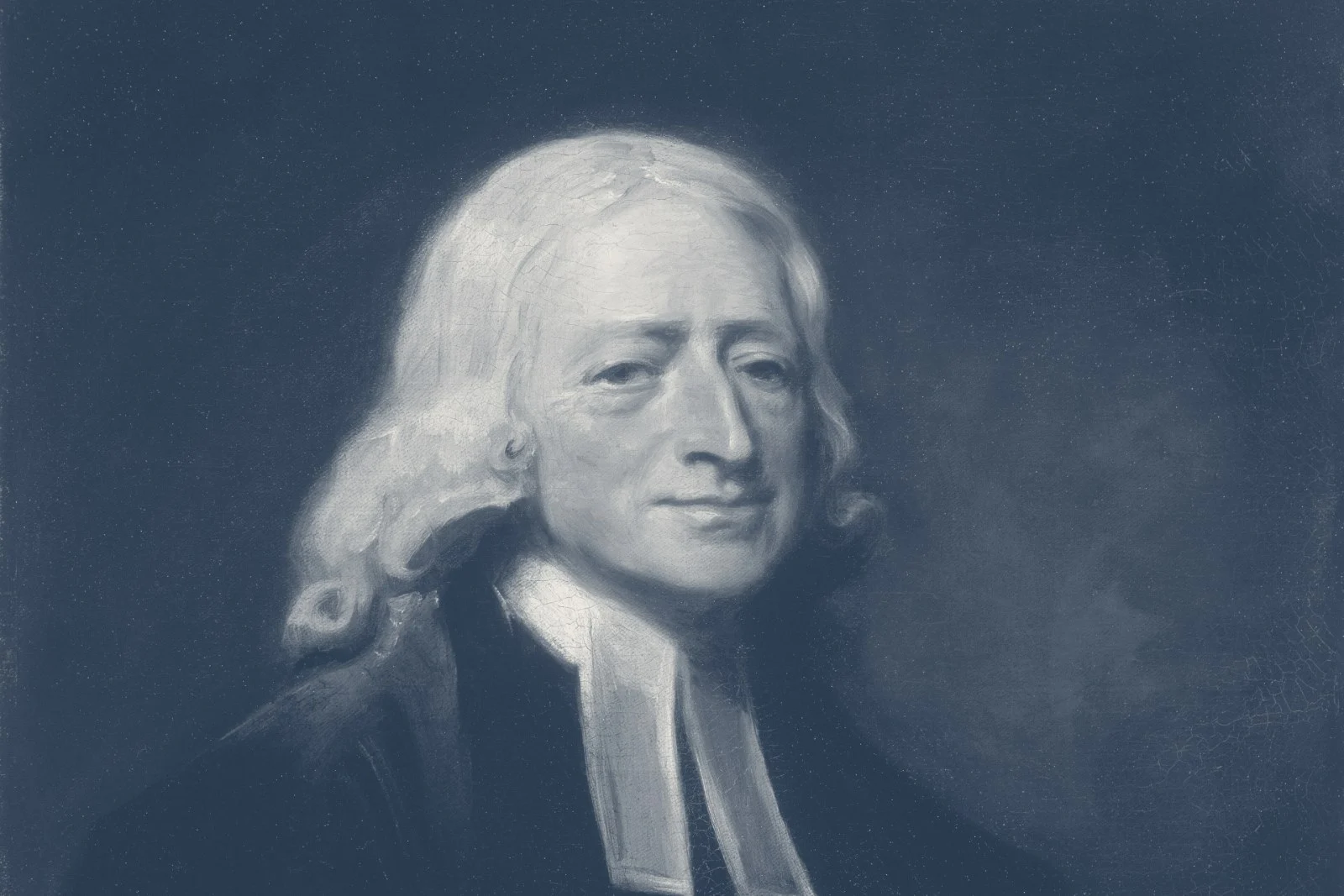
Featured image: John Wesley, portrait by George Romney, 1788–89, Philadelphia Museum of Art, via Wikimedia Commons (public domain); cropped and duotoned by Check the Claim.