Update (Nov. 16, 2026): James Talarico won the Nov. 3 election (Texas Tribune). We looked at the results in Did Christian nationalism lose the midterms? What the vote data shows The post below is unchanged from before the vote.
If you’ve seen ads in the Texas U.S. Senate race this fall, you’ve noticed that both candidates talk a lot about their faith. Republican Ken Paxton, the state’s attorney general, is an evangelical who says the country was founded on biblical truth. Democrat James Talarico, a state representative, is a student at Austin Presbyterian Theological Seminary, training for ministry in the Presbyterian Church (USA). (Texas Tribune)
A lot of coverage treats this as a contest over who’s the “real” Christian. There’s a more useful question underneath it: who gets to turn one reading of Christianity into rules everyone else has to live under? Both men are entitled to their faith and to talk about it. What matters here is what happens when that faith becomes government policy, and whether each campaign tells the truth about the other.
Two ways of bringing faith into politics
Paxton’s case is about public schools, and it’s a real policy program. On Sept. 2, 2025, his office urged school districts to act on Senate Bill 11, a new Texas law that requires every school board to hold a recorded vote on whether to set aside time for voluntary prayer and for reading the Bible or other religious texts. (Students need a parent’s permission to take part.) In that announcement, Paxton said the nation was “founded on the rock of Biblical Truth” and said he wants the Ten Commandments displayed in Texas classrooms. A second law, Senate Bill 10, requires schools to post donated copies of the Ten Commandments. On May 7, 2026, his office announced investigations of 29 districts, including Austin, Dallas, Houston and Fort Worth, over whether they had posted the displays and held the prayer vote.
The fair case for Paxton’s view goes like this: the Bible shaped American law and morals, school prayer under SB 11 is voluntary, and something is lost when the faith of earlier generations is pushed out of public life. Plenty of Texans agree.
Talarico brings faith into politics too. He just reaches a different conclusion. He puts “love your neighbor” at the center of his campaign and says that includes people of other faiths and none. On a Jan. 13 podcast, quoted by FactCheck.org, he said America “is not a Christian nation,” and described it as a place where you’re free to be a Christian, a Muslim, a Jew, a Hindu, an agnostic or an atheist. In a 2023 House speech, he called the Ten Commandments display law “idolatrous, exclusionary, and arrogant.” He wants faith in public life. What he objects to is government power lifting one tradition above the others.
Here’s the distinction that tends to get lost. A lawmaker whose faith shapes his votes is one thing. A law that requires every child to see a particular religious text on the classroom wall is another. And objecting to the second isn’t the same as opposing private prayer. The First Amendment handles these in two separate clauses: the Establishment Clause (government can’t set up or favor a religion) and the Free Exercise Clause (government can’t stop you from practicing yours).
Holding both campaigns to the same standard
This is where the race gets more revealing than the theology.
On Sept. 8, Paxton’s campaign released an ad showing an AI-generated Talarico reading from a fake “King James (Talarico) Bible.” FactCheck.org found that the ad stitched together remarks from different years, dropped their context, and supplied wording Talarico hadn’t used. Some of the underlying lines were real. In an October 2021 speech on the Texas House floor, Talarico said God is nonbinary. In a Sept. 9 Fox News interview, he said he’d been “provocative” and meant that human categories can’t define God. In the same interview he walked back a separate remark about six sexes: “There are not six sexes, there are two.” The original words and the clarifications both belong in the record.
Fairness can’t stop with one side, though. On Sept. 24, the Democratic National Committee and Texas Democrats posted a six-second clip of Paxton labeled “leaked audio,” and Talarico’s campaign had made related claims on X. In the clip, Paxton says God always has a plan. FactCheck.org showed that the audio came from a May 29, 2022, radio interview days after the Uvalde school shooting, and that Paxton was answering a request for words of comfort for grieving families. In the fuller answer, he said it was hard to offer comfort and encouraged families to hold onto their faith. Restoring that context doesn’t settle whether his answer was a good one; he was criticized for it at the time. It gives you what you need to judge it yourself.
One rule covers both cases: a real recording doesn’t give anyone license to rearrange it into something the speaker didn’t say.
Why this matters
Christian nationalism isn’t a synonym for being a conservative Christian, or a Christian at all, or a Republican voter. On this site we use it for a specific political idea: fusing Christian and American identity, and having the state privilege that identity. That’s why it’s more useful to look at a policy than to hang a label on a person.
Here the policies line up with research in a way worth noticing. When sociologists Andrew Whitehead and Samuel Perry measured Christian nationalism, two of their six survey statements were about allowing prayer in public schools and religious displays in public spaces. Supporting SB 10 and SB 11 doesn’t make anyone a Christian nationalist on its own; the scale measures a cluster of beliefs. But those two laws sit squarely inside what researchers were measuring.
Some claims in this race are ones we’ve already checked. Paxton has said the phrase “separation of church and state” doesn’t appear in the Constitution; we looked at where that phrase comes from and what the First Amendment says. He’s said the nation was founded on biblical truth; the Treaty of Tripoli is a good place to start on that one. Talarico’s pluralism deserves the same scrutiny: does his defense of religious freedom protect conservative Christians who disagree with him as fully as it protects everyone else? The broader charge that one party is hostile to the faith has its own check: are Democrats anti-Christian?
What to watch
- Nov. 3: Election Day. Expect more faith-themed ads from both sides, and more fact-checks of them.
- The classroom displays: families are suing to remove Ten Commandments displays required under SB 10, and Paxton is defending the law.
- SB 11 votes: how school boards voted on prayer time, and whether the attorney general’s investigations turn into legal action.
When a candidate says faith points toward a public duty, a few plain questions cut through the noise. What exactly would the government require? Whose freedom grows, and whose shrinks? Is the history being described accurately? And would the speaker accept the same standard of honest quotation from the other side?
Related (added Nov. 9, 2026): Is Adam Hamilton a Christian? The 2026 campaign revived an old American test looks at how Paxton’s attacks on Talarico’s faith, and similar attacks on Kansas’s Adam Hamilton, fit an old American test of who counts as a Christian.
Related (added Nov. 14, 2026): Is empathy a sin? A new poll finds white evangelicals split
Related (added Nov. 23, 2026): Did the most Christian counties reject Christian nationalism? A 2026 study, checked
Sources
- Ellie Ashby, reporting on faith in the Paxton–Talarico race, Texas Tribune (with Religion News Service), Aug. 13, 2026.
- Office of the Texas Attorney General, press release on SB 11, Sept. 2, 2025.
- Office of the Texas Attorney General, press release on district investigations, May 7, 2026.
- D’Angelo Gore, on the AI-generated Paxton ad, FactCheck.org, Sept. 15, 2026.
- Lori Robertson, on the Uvalde clip in full context, FactCheck.org, Sept. 25, 2026.
Spotted an error? Tell us.
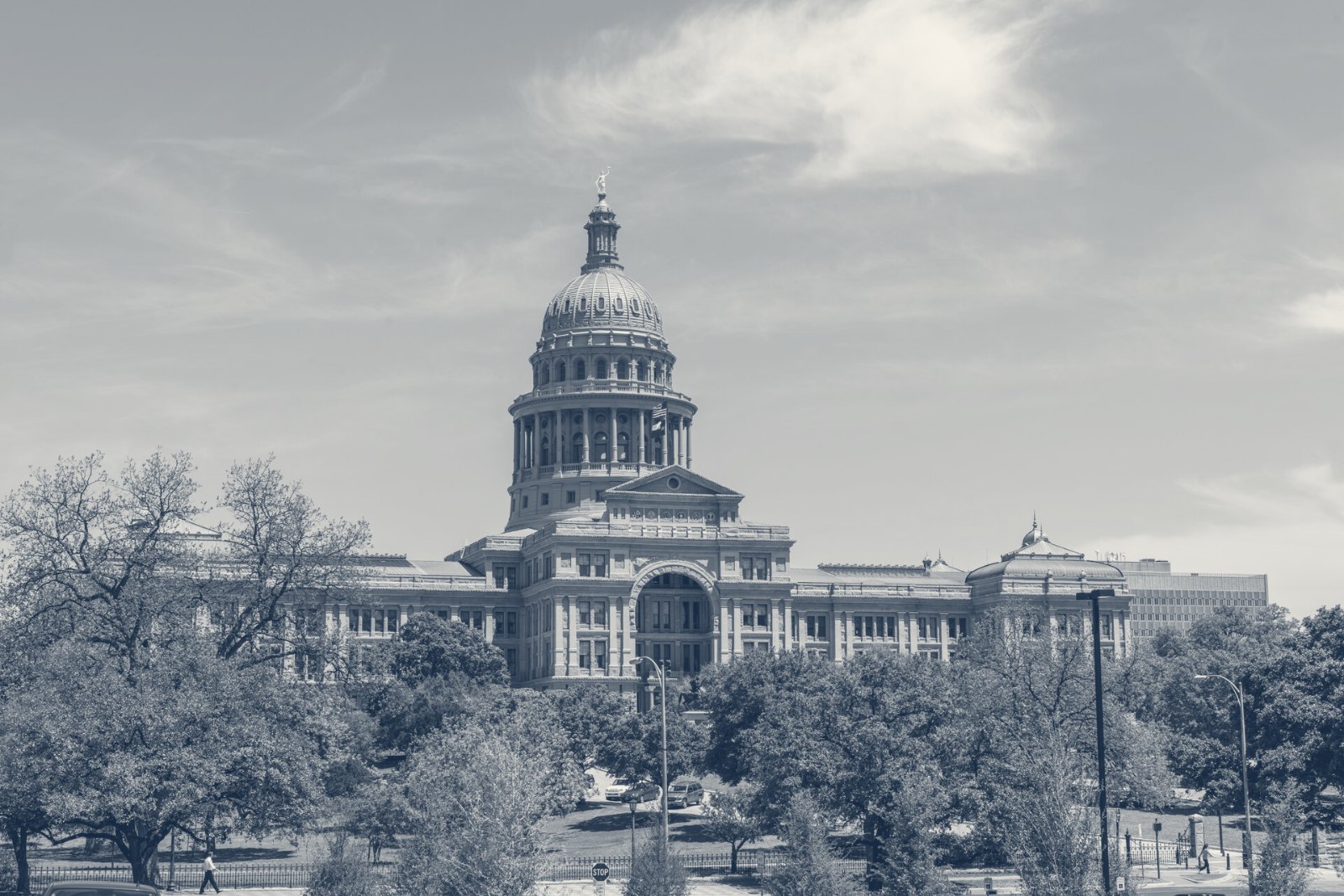
Image: The Texas State Capitol, Austin. Photo by Carol M. Highsmith (Library of Congress). Public domain, via Wikimedia Commons. Duotone by Check the Claim.