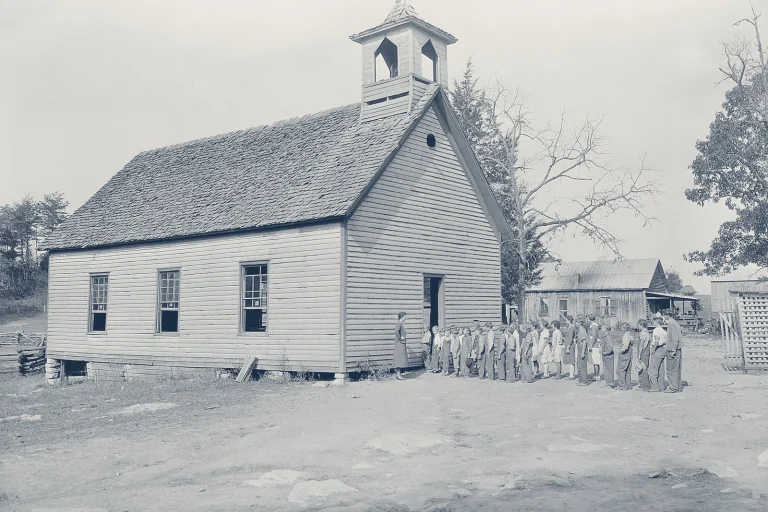
This fall, Houston ISD, the biggest school district in Texas, began using Bluebonnet Learning, the state-written reading lessons that include Bible stories, at some of its elementary campuses. The school board approved it unanimously in June. Then on September 30, the Texas Education Agency (TEA) reported that districts using Bluebonnet saw modest gains on the state’s STAAR tests.
So here’s the short answer to “what is the Texas Bible curriculum?” Bluebonnet is a full K–5 reading program, and Bible stories are one part of it. It’s optional for districts, but the state pays extra to those that use it. It needed about 4,200 corrections this year. We haven’t found a lawsuit against it. The bigger change is still ahead: a required statewide reading list, with Bible passages in most grades, starts in elementary schools in the 2030–31 school year.
What happened, in order
-
2023: The Legislature passed House Bill 1605. It told TEA to write state-owned textbooks and gave districts $40 per student for state-approved materials, plus another $20 per student for printing if they choose the state’s own. Hence the “up to $60 per student” in news stories.
-
November 22, 2024: The State Board of Education approved Bluebonnet’s K–5 reading lessons 8–7. Three Republicans joined the board’s Democrats in voting no.
-
2025–26 school year: Fewer than 200 of the state’s more than 1,200 districts and charters had ordered the reading materials as of summer 2025, according to a state database. By February 2026, about one in four districts said they used at least some of it, covering roughly 400,000 students. Some adopted it but dropped the religion-related lessons.
-
February 25, 2026: The board voted 9–6 to approve about 4,200 corrections.
-
June 26, 2026: The board approved the required reading list.
-
2026–27 school year: Houston joins in at some campuses. San Antonio ISD approved the lessons 6–1 for three campuses with failing state ratings. It has even crossed state lines: a district in southwest Colorado adopted it this summer. (Update, Nov. 8, 2026: That district’s school board voted 4–3 in August to drop the program, Chalkbeat reported.) (Update, Nov. 8, 2026: Unofficial results from the Nov. 3 election give Democrats 8 of the board’s 15 seats, enough to revisit the reading list. We looked at what a new majority can and can’t change in Can a new Texas State Board of Education take the Bible out of classrooms?)
What’s actually in the lessons
Kindergartners learn the Golden Rule through the Good Samaritan, a story that, the lesson says, “was told by a man named Jesus.” The kindergarten teacher guide’s script says “Jesus said that the Golden Rule sums up all of the important teaching from scripture,” and adds that “there are also versions of the Golden Rule in the ancient books from other religions, including Hinduism and Islam” (as quoted by the Baptist Standard, which cites the guide’s page numbers).
Other units, as described by reporters who read them: the days of Creation in kindergarten, the Prodigal Son in first grade, Queen Esther in second, Christianity’s influence on the Roman Empire, and the biblical allegory in C.S. Lewis’s The Lion, the Witch and the Wardrobe in fifth grade. The rest is ordinary reading instruction, including Texas figures like Opal Lee and Hector Garcia.
The case for it
Supporters have a real argument. The Bible shows up everywhere in English literature, art and American history. A child who has never heard of the Prodigal Son or David and Goliath will miss references that other kids catch. Board member Will Hickman, a Houston Republican, put it this way: “these stories are on the education side and are establishing cultural literacy.” The Texas Public Policy Foundation, a conservative think tank, argues it would be “impossible for Texas students to understand settlement in America” without knowing the Bible.
Supporters also stress choice. Texas Education Commissioner Mike Morath called Bluebonnet “an important, optional new resource” and has told districts they can adopt it, reject it or adapt it.
First Liberty Institute, a religious-liberty law firm, told Morath in 2025 that the courts have long allowed Bible study in schools.
What critics say
Many of the sharpest critics are religious people, and their complaint is about how the Bible is taught. Eric Black, the editor of the Baptist Standard, a news outlet serving Texas Baptists, criticized the lessons’ “watered-down treatment of the Golden Rule” and wrote that “how it’s taught needs to be accurate, and public elementary schools simply aren’t the place for that.” The second-grade Esther lesson suggests she acted on faith in God; Mark Chancey, a religious studies professor at Southern Methodist University, has noted that “the Book of Esther famously does not even include the word God.” Rice University scholar David Brockman warned that the heavy focus on the Bible “threatens to turn students, parents, and teachers who are not Christians or Jews into outsiders.”
Then there are the errors: about 4,200 changes, mostly copyright problems, formatting mistakes and typos. (TEA notes that some were “simply improvements based on teacher feedback.”) Four other publishers asked for 16 corrections, combined. Fixing them will cost the state up to $8.4 million, and a TEA spokesman said, “The errors are unacceptable, and the vendor responsible for the errors has been fired.” None of the reports we read tied the corrections to the Bible lessons in particular.
What the law says
The Establishment Clause is the part of the First Amendment that bars the government from setting up an official religion. In 1963, in Abington School District v. Schempp, the Supreme Court struck down a Pennsylvania law requiring Bible verses to be read aloud every school day. In the same opinion, it drew the line both sides still argue over:
“It certainly may be said that the Bible is worthy of study for its literary and historic qualities. Nothing we have said here indicates that such study of the Bible or of religion, when presented objectively as part of a secular program of education, may not be effected consistently with the First Amendment.”
In other words, schools can teach about the Bible. They can’t teach students to believe it. Both sides quote that passage. They disagree about whether a kindergarten lesson on Jesus and the Golden Rule counts as “objective.”
In 2022, in Kennedy v. Bremerton, the Court said the Establishment Clause should be read by “reference to historical practices and understandings,” and named coercion as one of the “foremost hallmarks of religious establishments.” That’s the same argument now in front of the Court over the Ten Commandments in classrooms.
The “required by 2030” part
You may have seen the claim that Texas will require Bible content in public schools starting in 2030. That’s close, with two corrections: it isn’t Bluebonnet, and it comes from a state board rule under a 2023 law. HB 1605 told the state board to adopt a required list of literary works, and the board’s adopted rule phases its list in: kindergarten through fifth grade in 2030–31, then sixth grade in 2031–32, seventh and eighth in 2032–33, and high school in 2033–34. The list includes passages like the Prodigal Son, Jonah, the Beatitudes and parts of Exodus. Parents can pull a child out of a required reading that conflicts with their religious or moral beliefs.
Why this matters
It’s not just Texas. In Oklahoma, state superintendent Ryan Walters ordered Bibles into classrooms and Bible lessons for grades 5 through 12. Walters resigned in September 2025, and his successor, Lindel Fields, rescinded the order a month later, saying he had “no plans to distribute Bibles or a Biblical character education curriculum in classrooms.”
Behind many of these efforts sits a historical claim. At the June meeting, one supporter told the board, “America should celebrate our 250 years that started as a nation of unwavering Christian values.” The belief that America was founded as a Christian nation, and that its public institutions should reflect it, is central to what researchers call Christian nationalism. It’s also a history question you can check, starting with whether America was founded as a Christian nation.
Keep two questions apart. Knowing Bible stories helps kids read Western literature; that’s a fair point. Whether the state should teach five-year-olds what scripture means is a separate question, and many Christians are the ones asking it.
What to watch
-
The Supreme Court’s Ten Commandments decision. If the justices take the Texas case, their reading of the Establishment Clause will shape how far Bible-based lessons can go.
-
The 2030 list. The rule takes effect July 1, 2027, and the first required readings arrive in 2030–31. A legal challenge could come any time before then.
-
Test scores. TEA’s gains were small, and Zeph Capo of the Texas American Federation of Teachers called them “rather paltry.” It will take a few more years of data to know.
Related claims: America was founded as a Christian nation · Separation of church and state isn’t in the Constitution · The founders were devout Christians
Sources
-
Texas Education Agency, HB 1605 and IMRA (funding) and Bluebonnet Learning K–5 reading page
-
State Board of Education, adopted rule on required literary works, 19 TAC Chapter 110 (PDF)
-
Abington School District v. Schempp, 374 U.S. 203 (1963); Kennedy v. Bremerton School District (2022)
-
First Liberty Institute, letter to Commissioner Morath, March 5, 2025
-
Texas Tribune: the November 2024 vote; the cost of corrections; the June 2026 reading list
-
The 74: districts’ adoption and the reading list; the 4,200 corrections
-
Eric Black, “Texas curriculum provides poor religious education,” Baptist Standard, Dec. 4, 2024
-
Benyamin Cohen, “Why Jews, many Christians are opposed to adding Esther to the curriculum in Texas schools,” The Forward via The Christian Century, Nov. 21, 2024
-
Chalkbeat Colorado, Montezuma-Cortez adopts Bluebonnet, Aug. 6, 2026
-
ABC13, Houston ISD approval, June 2026; Texas Public Radio, San Antonio districts, Aug. 10, 2026; Community Impact, STAAR results, Oct. 1, 2026
-
ABC7/AP, Oklahoma rescinds Bible mandate, Oct. 15, 2025
Spotted an error? Tell us.