Did Christian nationalism lose the midterms? On the morning after the Nov. 3 election, some of its sharpest critics said yes. The exit polls tell a more complicated story: the voters most likely to hold Christian-nationalist views held steady. The Democratic wave came from somewhere else.
That matters, because “we won the argument” and “we won the election” are two different claims, and only one of them can be checked against a ballot count.
What are people saying?
Rachel Laser, president of Americans United for Separation of Church and State, said in a statement the day after the election: “White Christian Nationalism lost yesterday.” She added, “Church-state separation and the pluralistic democracy it enables won.” (Americans United, Nov. 4)
Brian Kaylor, editor of Word&Way, called the results “a stark repudiation of Hegseth’s brand of violent Christian Nationalism,” referring to Defense Secretary Pete Hegseth. (Word&Way, Nov. 4)
What’s the strongest case that they’re right?
It’s a reasonable reading of the night. Some of the best-known champions of mixing faith and state power lost.
In Texas, Lt. Gov. Dan Patrick conceded to Democrat Vikki Goodwin after midnight. (CBS Texas) Patrick chairs President Trump’s Religious Liberty Commission. (Justice Department) At the commission’s April 13, 2026, hearing, he asked a witness whether every school, university and business should be required to post a notice saying that the separation of church and state is “the biggest lie that’s been told in America since our founding.” (hearing transcript, at 00:37:13) That’s a claim we’ve checked on our page about whether separation of church and state is in the Constitution. In the U.S. Senate race, Republican Ken Paxton lost to Democrat James Talarico, a Presbyterian seminary student who campaigned openly on his faith. (Texas Tribune) (We looked at that race in Paxton vs. Talarico: who speaks for Christianity? and at pastors who questioned his faith in Can you be a Christian and a Democrat?) Further down the ballot, unofficial results show Democrats winning a majority on the Texas State Board of Education, the body that approved Bible stories for the state’s reading lessons. (We looked at what that majority could change in Can a new Texas State Board of Education take the Bible out of classrooms?)
Kaylor also cites political scientist Ryan Burge, who tracked eight battleground House districts he identified as heavily mainline Protestant: all eight were held by Republicans, and all eight flipped to Democrats. (Burge on Bluesky) If you see Christian nationalism as a political project, watching its best-known champions lose looks like a defeat.
Did Christian nationalism lose the midterms? What exit polls show
Researchers who measure Christian nationalism find it’s most concentrated among white evangelical Protestants. In PRRI’s 50-state survey, released in February, 67% of white evangelicals qualified as Christian nationalism “adherents” or “sympathizers,” compared with 32% of all Americans. (PRRI)
If Christian nationalism had been rejected, you’d expect to see movement in that group. There was little, and what there was favored Republicans. According to the network exit polls, white born-again or evangelical Christians gave Republicans 82%, the same share Donald Trump won from them in 2024. (Christian Post) The Fox News Voter Poll, a separate survey, found the same 82% (to 16% for Democrats) and an uptick from 79% in 2024. (Newsweek)
What changed was their share of the electorate. White evangelicals made up 17% of voters this year, down from 23% in the 2024 exit poll. Fewer of them voted, or more of everyone else did. Either way, the ones who voted stuck with the party they’ve backed for decades. (For that longer history, see Have evangelicals always voted Republican?)
So where did the wave come from?
From other religious groups, and from people with no religion at all.
- Catholics split almost evenly, 50% Democratic to 49% Republican. In 2024, 59% backed Trump.
- Religious “nones” voted 78% Democratic, up from 71%, and grew from 24% to 27% of the electorate.
(Both from the exit polls, as reported by the Christian Post.)
And when people on both sides explained the result, faith wasn’t the first thing they named. Patrick’s own concession statement called it “a wave election in Texas and across the country” and listed “affordability, gas prices, data centers, 765-kV lines” as the issues on voters’ minds. (CBS Texas)
Did only 17% of Christians vote?
The mirror-image claim came from the right. In a video News24, an Australian outlet, posted on election day, political strategist Tiffany Marie Brannon said that “out of the evangelical church attending Christians here in America, only 17 per cent showed up to vote in this election.” (News24) Two days later, Washington Times columnist Cheryl K. Chumley built a column around her number, under the headline “Christians are failing America”: “Seventeen percent. Fewer than a fifth of America’s self-professed Christians participated in an election.” (Washington Times)
The concern behind it deserves a fair hearing. Chumley argues that “a free society requires citizens who can self-govern,” ties that self-government to biblical morality, and says the country loses something when Christians stay home. Turnout is a real question this year. By the exit polls’ count, white evangelicals made up a smaller share of the electorate than they did two years ago.
The 17% figure doesn’t hold up as a turnout rate, though. Seventeen percent is also the number in this year’s exit polls, where it measures something else: white born-again or evangelical Christians “made up a much smaller share of the electorate (17%) than in 2024 (23%).” (Christian Post) That figure is their share of all voters. It tells us nothing about what share of evangelicals cast a ballot.
Some quick math shows why one in six can’t be right. PRRI estimates that white evangelical Protestants are 13% of American adults. (PRRI) The exit polls use a wider definition: they ask voters whether they consider themselves born-again or evangelical, which pulls in some Catholics and mainline Protestants. (Religion News Service) So the two numbers can’t be compared exactly. Still, if only one in six of these voters had shown up, they would have been a far smaller slice of the electorate, nowhere near 17%.
The column also widens Brannon’s “evangelical church attending Christians” into all “self-professed Christians.” That broader group includes Catholics, who split almost evenly this year, 50% Democratic to 49% Republican. The column also repeats Brannon’s claim that turnout among Muslim and Arab American voters was “about 70 percent.” We couldn’t find a published source for that number. For what the exit polls do show about Muslim voters, and why they couldn’t swing a national election, see Did an “unholy alliance” win the 2026 midterm elections?
Chumley also writes that “America’s founding was premised on the idea that godly people would run the government.” The Constitution sets no religious requirement for holding office: “no religious Test shall ever be required as a Qualification to any Office or public Trust under the United States.” (Article VI) We look at the founding question in detail on our page about whether America was founded as a Christian nation.
So both readings get this year’s numbers wrong. White evangelicals didn’t abandon their party: 82% backed Republicans, the same as in 2024. They also didn’t stay home in the numbers the 17% claim suggests. Their share of the vote did fall from 2024, which means they turned out at a lower rate, compared with other voters, than they did two years ago.
Why this matters
Christian nationalism, as we use the term, is a belief about national identity: the idea that being truly American and being a (certain kind of) Christian are the same thing, and that government should act on that. (We lay out the definition in Christian nationalism vs. patriotism.) Ballots list candidates and parties, so an election measures an idea like that only indirectly.
What an election can tell you is who holds power. On that front, something real did change: the man who chairs the Religious Liberty Commission is leaving the lieutenant governor’s office. As lieutenant governor he has been president of the Texas Senate (Texas Constitution, Art. 4, Sec. 16), where the state’s 2025 Ten Commandments law (SB 10) passed (bill history), and he will hand that job to Goodwin in January 2027.
What an election can’t tell you is whether people changed their minds. PRRI reports that support for Christian-nationalist ideas has stayed largely stable since it started asking in late 2022. A midterm fought largely over war and prices doesn’t undo that. The same caution applies in the other direction: anyone on the right who reads Nov. 3 as Christians abandoning the party will find that white evangelical voters stayed.
So Laser’s claim is best read as an interpretation of the night. The part about power holds up: several of the officials critics see as the movement’s leading champions lost. The part about the idea losing ground is one the exit polls don’t support. Claims like this are easy to make the morning after, from either side, and they’re worth checking against the same numbers.
What to watch
- The Religious Liberty Commission: the executive order that created it set a July 4, 2026, end date (Executive Order 14291), but a later order extended it through Sept. 30, 2027. (Executive Order 14354) It was still holding meetings in August (Federal Register), and its report is still a draft; the meeting to finalize it was postponed with no new date. (Justice Department) Watch whether Patrick stays on as chair after January.
- The Texas canvass: results become official between Nov. 21 and Dec. 7, and the closest State Board of Education race was decided by 564 votes, so a recount is possible.
- Better data: exit polls are early estimates. Pew’s validated-voter study, which checks survey answers against voter files, is a better test of who voted and how; its 2024 study came out in June 2025.
- PRRI’s next survey: the real measure of whether Christian-nationalist ideas are gaining or losing ground.
Update (Nov. 10, 2026): The 2026 exit-poll figures in this post come from a new survey, The Voter Poll by SSRS, which replaced the National Election Pool exit poll used in earlier years, so comparisons with 2024 carry an extra asterisk. We look at what that means, and at the claim that “half of evangelicals stayed home,” in Did half of evangelicals stay home in 2026? Checking the math.
Related (added Nov. 23, 2026): Did the most Christian counties reject Christian nationalism? A 2026 study, checked
Sources
- Americans United for Separation of Church and State, “AU cheers electoral pluralism, rejection of white Christian Nationalism” (statement by Rachel Laser), Nov. 4, 2026. https://www.au.org/the-latest/press/americans-united-cheers-electoral-pluralism-rejection-of-white-christian-nationalism/
- Baptist News Global, “Christian nationalism takes a beating at the polls,” Nov. 5, 2026. https://baptistnews.com/article/christian-nationalism-takes-a-beating-at-the-polls/
- Word&Way, Brian Kaylor, Nov. 4, 2026. https://wordandway.org/2026/11/04/a-blue-mainline-protestant-wave-challenges-hegseths-violent-christian-nationalism/
- CBS Texas, “Democrat Vikki Goodwin upsets incumbent Dan Patrick,” Nov. 4, 2026. https://www.cbsnews.com/texas/news/texas-lieutenant-governor-election-results-2026/
- PRRI, 50-state Christian nationalism survey press release, Feb. 17, 2026. https://prri.org/press-release/new-50-state-survey-finds-majority-of-republicans-56-qualify-as-christian-nationalism-supporters/
- U.S. Department of Justice, press release on the Religious Liberty Commission’s draft report (names “Chairman Dan Patrick”), June 26, 2026. https://www.justice.gov/opa/pr/president-trumps-religious-liberty-commission-delivers-historic-report-draft
- White House, Executive Order 14291, “Establishment of the Religious Liberty Commission,” May 1, 2025. https://www.whitehouse.gov/presidential-actions/2025/05/establishment-of-the-religious-liberty-commission
- Federal Register, Executive Order 14354, “Continuance of Certain Federal Advisory Committees,” signed Sept. 29, 2025 (Sec. 1(p) continues the Religious Liberty Commission until Sept. 30, 2027). https://www.federalregister.gov/documents/2025/10/06/2025-19485/continuance-of-certain-federal-advisory-committees
- Religion News Service, report on Patrick’s remark at the commission’s April 13 hearing, April 14, 2026. https://religionnews.com/2026/04/14/church-state-separation-is-lie-says-trump-commission-chair/
- Texas Tribune, Paxton vs. Talarico U.S. Senate race, Nov. 3, 2026. https://www.texastribune.org/2026/11/03/texas-ken-paxton-james-talarico-us-senate-elections-2026/
- Texas Constitution, Art. 4, Sec. 16. https://codes.findlaw.com/tx/constitution-of-the-state-of-texas-1876/const-sect-16-nr3/
- Texas Legislature Online, SB 10 (89th Legislature, Regular Session) bill history. https://capitol.texas.gov/BillLookup/History.aspx?LegSess=89R&Bill=SB10
- Pew Research Center, 2024 validated voters report, June 26, 2025. https://www.pewresearch.org/politics/2025/06/26/behind-trumps-2024-victory-a-more-racially-and-ethnically-diverse-voter-coalition/
- Christian Post, Ryan Foley, “3 takeaways from the midterm exit polls,” Nov. 5, 2026. https://www.christianpost.com/news/3-takeaways-from-the-midterm-election-exit-polls.html
- Newsweek, Jesus Mesa, “White Evangelical Support for Republicans Ticked Up Despite Blue Tsunami,” Nov. 2026. https://www.newsweek.com/white-evangelical-support-for-republicans-ticked-up-despite-blue-tsunami-12672721
- U.S. Department of Justice, Religious Liberty Commission, commissioners page (lists “Texas Lt. Gov. Dan Patrick (Chair)”), accessed Nov. 5, 2026. https://www.justice.gov/religious-liberty-commission/commissioners-and-advisory-board-members
- U.S. Department of Justice, transcript of the Religious Liberty Commission’s seventh hearing, April 13, 2026. https://www.justice.gov/religious-liberty-commission/media/1438101/dl?inline
- U.S. Department of Justice, video, “Seventh Hearing of the Religious Liberty Commission,” April 13, 2026. https://www.justice.gov/opa/video/seventh-hearing-religious-liberty-commission
- Federal Register, “Meeting of the Religious Liberty Commission,” Aug. 7, 2026. https://www.federalregister.gov/documents/2026/08/07/2026-16178/meeting-of-the-religious-liberty-commission
- U.S. Department of Justice, Religious Liberty Commission upcoming events (finalizing meeting postponed), accessed Nov. 5, 2026. https://www.justice.gov/religious-liberty-commission/upcoming-events
- Ryan Burge, Bluesky post on mainline battleground districts, Nov. 4, 2026. https://bsky.app/profile/ryanburge.bsky.social/post/3mzie2hxexs2m
- News24 (Australia), “‘Crazy’: Only 17 per cent of Christians came out to vote in midterm elections” (video, Tiffany Marie Brannon), posted Nov. 4, 2026, Australian time. https://www.news24.com.au/politics/us-politics/crazy-only-17-per-cent-of-christians-came-out-to-vote-in-midterm-elections/video/fa0d8cea118683a28faa72b2c2f1fa04
- Washington Times, Cheryl K. Chumley, “Christians are failing America” (commentary), Nov. 5, 2026. https://www.washingtontimes.com/news/2026/nov/5/christians-failing-america/
- Religion News Service, “A lot of white evangelical voters aren’t evangelicals,” Nov. 13, 2018 (how exit polls define evangelical). https://religionnews.com/2018/11/13/a-lot-of-white-evangelical-voters-arent-evangelicals/
- PRRI, 2025 PRRI Census of American Religion. https://prri.org/spotlight/2025-prri-census-of-american-religion/
- U.S. Constitution, Article VI (National Archives transcript). https://www.archives.gov/founding-docs/constitution-transcript
- Axios, Russell Contreras, “Religious ‘nones’ shatter white evangelical dominance at the polls,” Nov. 6, 2026 (nones outnumbered white evangelicals by ten points in the electorate). https://www.axios.com/2026/11/06/white-evangelicals-shrinking-electorate-republicans
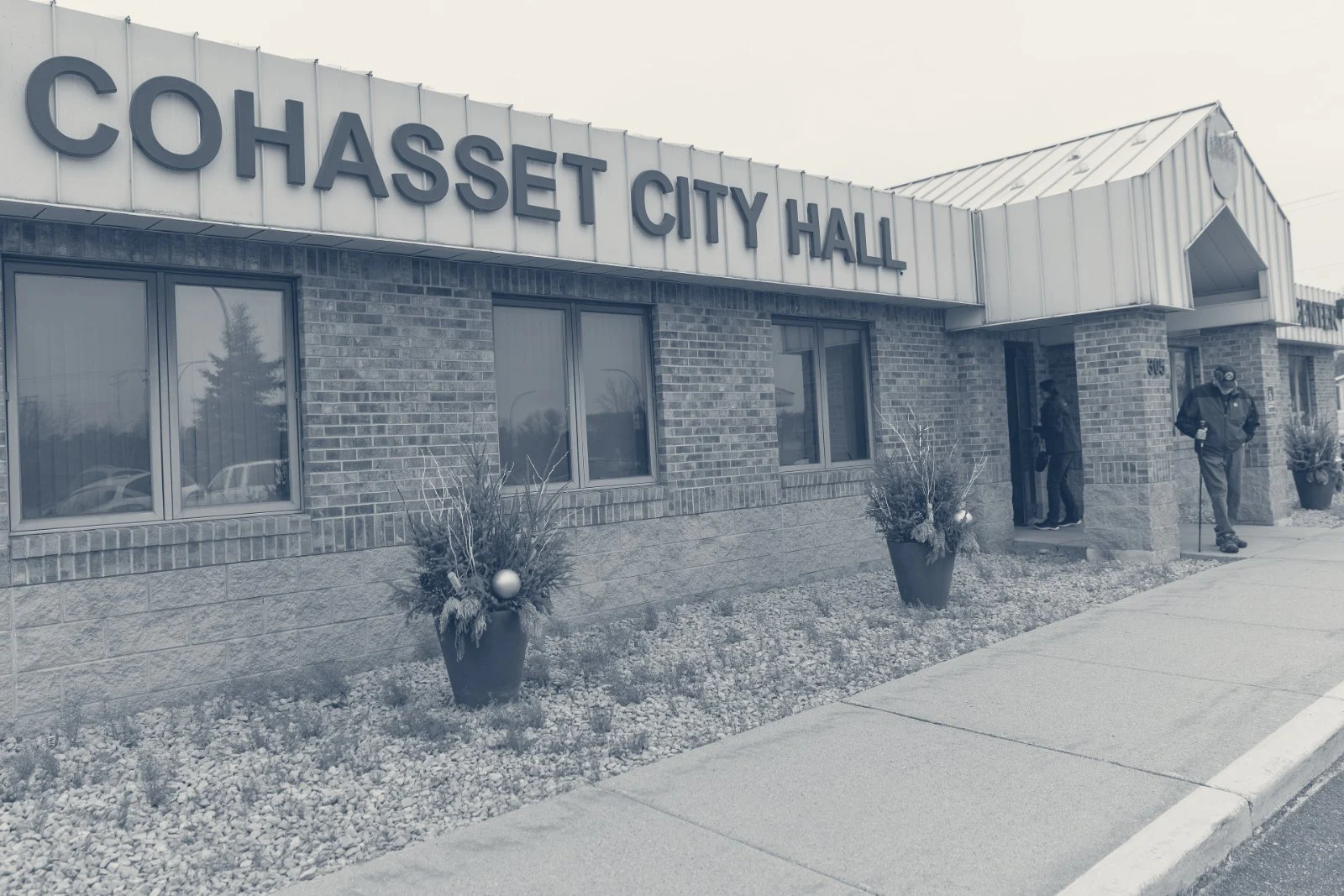
Photo: A voter leaving the polling place at Cohasset City Hall, Minnesota, on Election Day 2024, Lorie Shaull, CC BY 2.0, via Wikimedia Commons; cropped and duotoned by Check the Claim.
Spotted an error? Tell us.